Tidying Terrace Gardens
August 16, 2024
Another big summertime task is checked off the list.
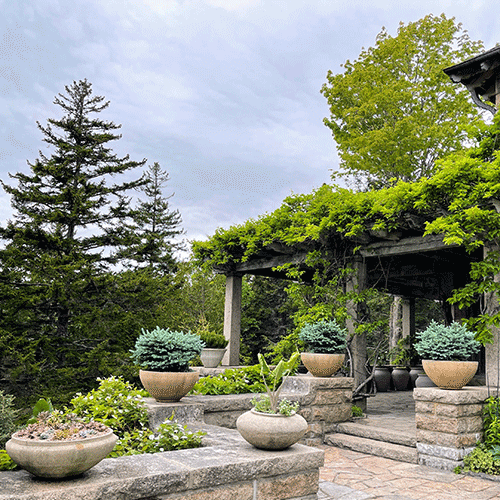
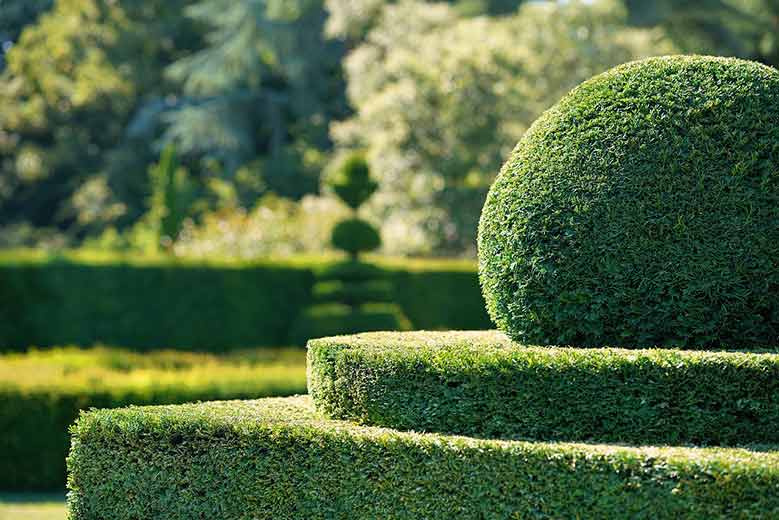
Along one side of my home overlooking the farm, I have a large stone terrace constructed with formal hedged gardens. For the upper parterres, I selected contrasting evergreen shrubs – boxwood, and golden barberry. To provide interest, these shrubs are sheared to different heights, creating a step effect. In the lower parterres, carefully designed and manicured boxwood hedges surround two hand-casted antique fountains. On one side, a low hedge shaped with an inverted V pattern, or chevron. Maintaining all these plantings requires extra maintenance and grooming from time to time, but I think it’s well worth the effort.
Enjoy these photos.
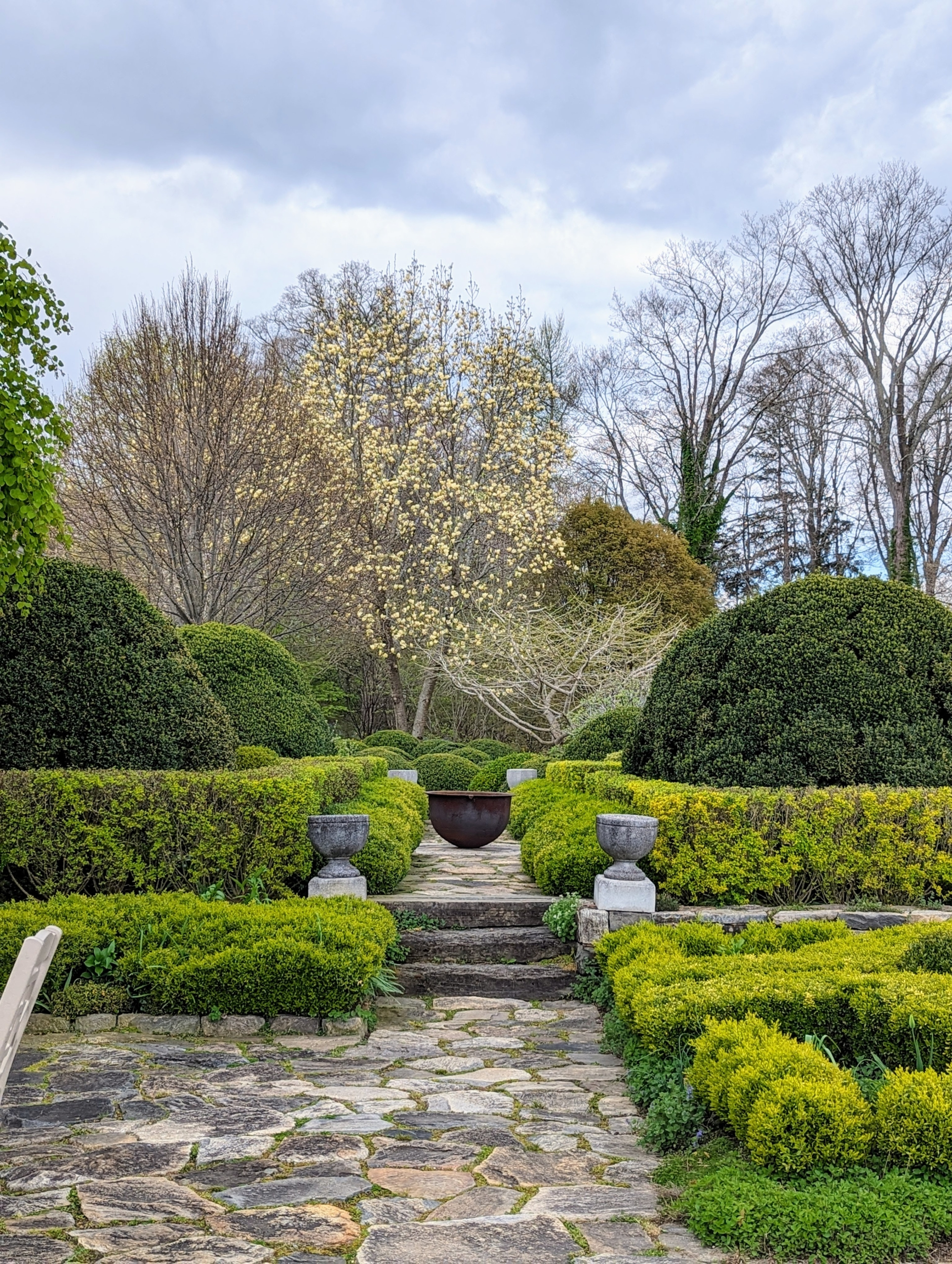
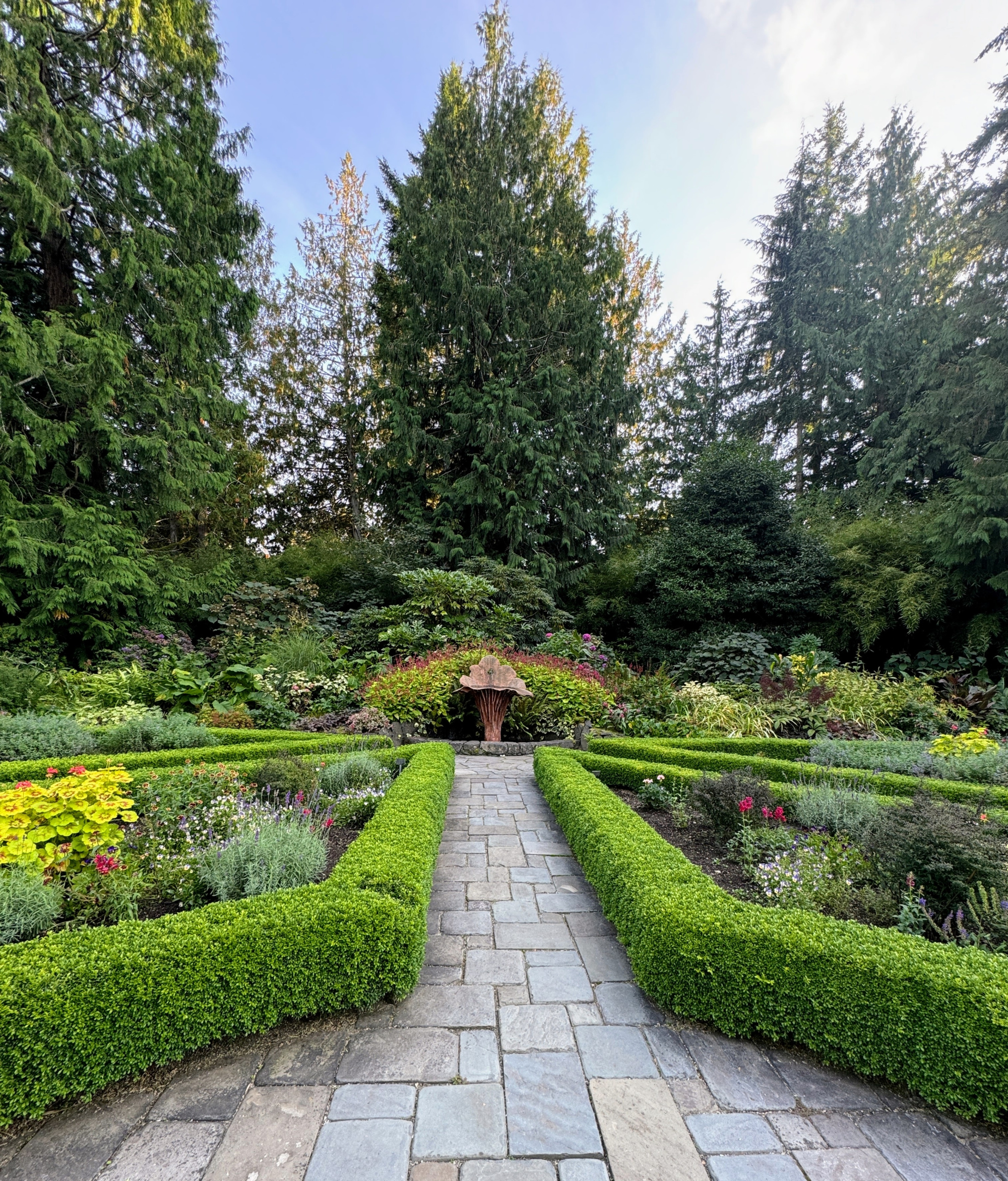
I am so pleased with how well these formal gardens have developed over the years. I've worked hard to maintain the detailed shapes of the hedges and shrubs. This is the lower terrace that is located just outside my Winter House. It's a lovely place to sit and conduct meetings or enjoy a lovely summer lunch.
It's important to groom the specimens every few months when they all appear overgrown.
This is the golden barberry before it is trimmed. Golden barberry takes on its brightest coloring when it gets at least six hours of direct sun a day.
Golden barberry, Berberis thunbergii, is a deciduous shrub that is compact, adaptable, very hardy and shows off striking small, golden yellow oblong leaves.
Buxus is a genus of about 70 species in the family Buxaceae. Common names include box or boxwood. The boxes are native to western and southern Europe, southwest, southern and eastern Asia, Africa, Madagascar, northernmost South America, Central America, Mexico, and the Caribbean. The leaves are arranged opposite from each other, making pairs.
Both barberry and boxwood are known for being robust. Phurba is excellent at trimming these shrubs and takes on the task whenever it's needed.
Phurba works on the lower parterre, shaping the boxwood by hand. These are Okatsune 30-inch long Hedge Shears. Okatsune shears are light and precise, and come in a range of sizes. This pair has shorter handles and longer blades.
Phurba uses STIHL hand-held HSA 26 garden shears to trim the sides and top of this low hedge. I love this tool and use it often around the farm. The hedge shear attachment with double-sided cutting blades cuts in both directions.
There are always lots of clippings to clear away, but that's because these hedges are doing so well. Good, regular pruning stimulates new growth, controls unwanted growth, and removes dead or damaged branches.
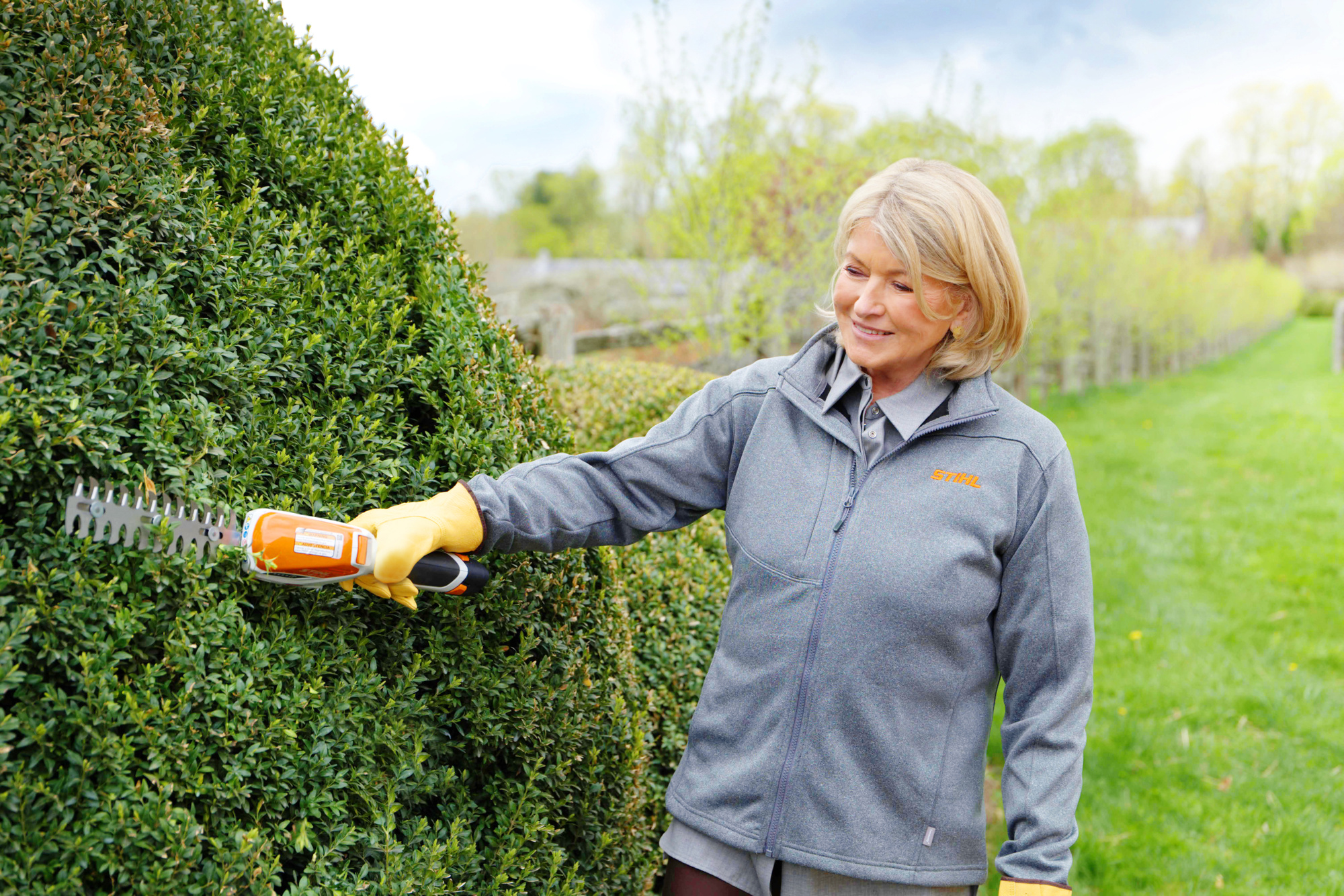
Pruning is also important to keep these defined shapes. Boxwood is a popular choice for formal gardens because of its versatility, ability to be pruned, and year-round bold green foliage. Here, Phurba works on the upper terrace quadrants, again hand trimming the big boxwood shrubs.
To reach the tops of the boxwood shrubs, Phurba uses an orchard tripod ladder. One can see where he has trimmed, and where he still has work to do.
Phurba makes sure to cover every side of the shrubs and hedges, sometimes carefully having to walk in tight spaces. Every so often, Phurba stops to sharpen his tools. Here he is using his STIHL pruner, axe, and tool sharpener. It is crucial to always work with sharp tools in the garden. They make cleaner cuts that allow plants to heal faster and resist disease, insects, and poor weather. Dull blades can crush and tear plant tissue, which makes healing more difficult and increases the risk of infection.
This entire chore is time-consuming and takes a few days to complete.
Every so often, Phurba stops to assess his work from a distance. He considers the overall shape of each hedge and shrub as well as how all four quadrants look together.
Finally, Phurba covers all the beds with a two inch layer of compost made right here at the farm.
These gardens look so excellent after a good grooming.
It takes time to develop formal gardens. When planning, one must consider type of plants, their size at the time of planting and at maturity, the level of care, the environment, and local weather conditions. It can take up to 10-years for a formal garden to be fully established.
All the hedges are all level around the boxwood. These plants have filled out the areas so nicely.
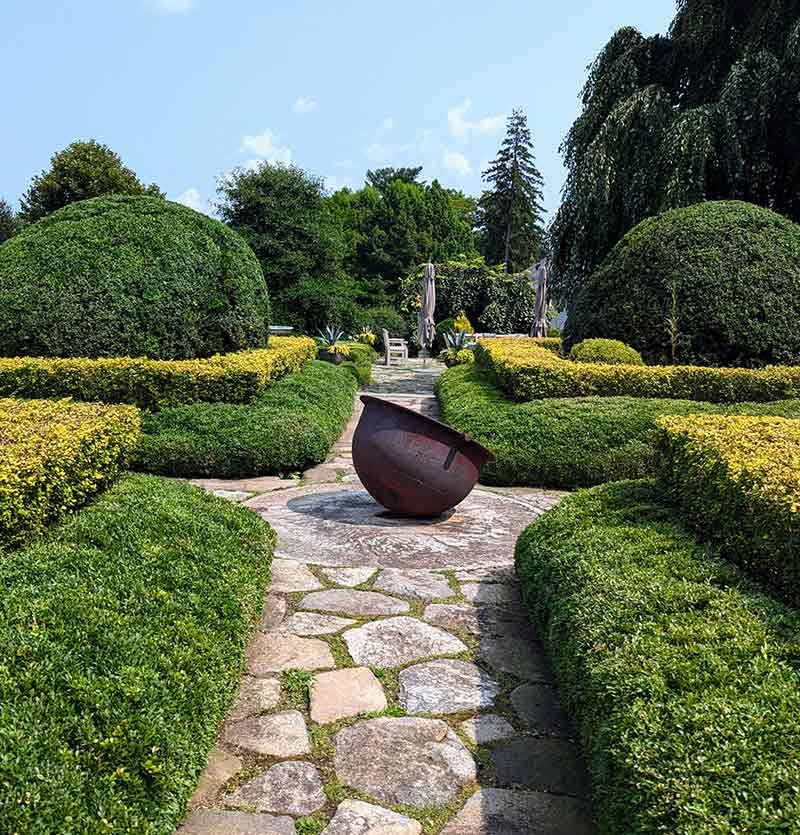
And here is a look at all four quadrants with my antique sugar pot in the center. Sugar kettles were used on 19th century Louisiana plantations for the production of sugar. In the winter, I use it as a fire pit when entertaining. The terrace looks great. Thanks Phurba.